The Best Fluffy Pancakes recipe you will fall in love with. Full of tips and tricks to help you make the best pancakes.

How to Stay Motivated on Your Fitness Journey

Starting a fitness journey can be tough. It’s not just about having willpower. It’s about finding ways to keep you excited about your fitness goals for the long haul.
At first, many people are super excited. But soon, their motivation starts to fade. The good news is, you can learn to stay motivated. With the right strategies, you can keep going strong and see great results.
This guide is for anyone looking to stay motivated in their fitness journey. Whether you’re just starting or need a boost, we’ve got you covered. You’ll learn how to keep your passion for fitness alive.
Key Takeaways
- Recognize motivation as a learned skill
- Develop sustainable fitness strategies
- Understand personal motivation triggers
- Create realistic and achievable fitness goals
- Build a supportive fitness environment
Understanding the Psychology of Fitness Motivation
Fitness motivation is more than just willpower. Our brains are complex and respond to specific triggers and patterns. Knowing these can change how you see fitness and personal growth.
Exploring habit formation shows how our minds work. Research says habits form in a three-step loop: cue, routine, and reward. This explains why some fitness goals last while others don’t.
The Science Behind Building Healthy Habits
Building good habits needs a smart plan. Here are some key tips:
- Start with small, achievable goals
- Create consistent daily routines
- Understand your brain’s reward system
- Practice positive reinforcement
Identifying Your Personal Motivation Triggers
Everyone has their own reasons for staying fit. Some are driven by:
- Visual progress tracking
- Competitive challenges
- Social support networks
- Performance metrics
“Motivation is what gets you started. Habit is what keeps you going.” – Jim Ryun
Breaking Down Mental Obstacles
Mental blocks like self-doubt and fear can stop your fitness goals. Recognizing these is the first step to beating them. Cognitive reframing can turn negative thoughts into positive ones.
Understanding motivation and habit formation helps you approach fitness better. Your mind is as crucial as your body in fitness.
Setting SMART Fitness Goals That Drive Success
Starting your fitness journey with SMART goals is key. These strategies turn vague dreams into clear, actionable plans. SMART goals give you a roadmap, keeping you on track and motivated.
“A goal without a plan is just a wish.” – Larry Elder
Now, let’s dive into the SMART framework for fitness goals:
- Specific: Clearly state what you aim to achieve
- Measurable: Set up ways to track your progress
- Achievable: Make sure your goals are within reach
- Relevant: Ensure your goals match your fitness dreams
- Time-bound: Set deadlines for achieving your goals
Creating effective SMART goals takes thought. Here’s a comparison to show the difference:
| Vague Goal | SMART Goal |
|---|---|
| Lose weight | Lose 15 pounds in 3 months by exercising 4 times weekly |
| Get stronger | Increase bench press by 25 pounds within 12 weeks |
| Run more | Complete a 5K race in under 30 minutes by September |
Your fitness goals should push you but still be reachable. Keep checking and tweaking your SMART goals to stay motivated and track your progress.
Creating a Sustainable Workout Routine
Creating a good workout plan is more than just moving. It’s about knowing your fitness goals, energy, and lifestyle. The goal is to make it feel like a fun journey, not a chore.
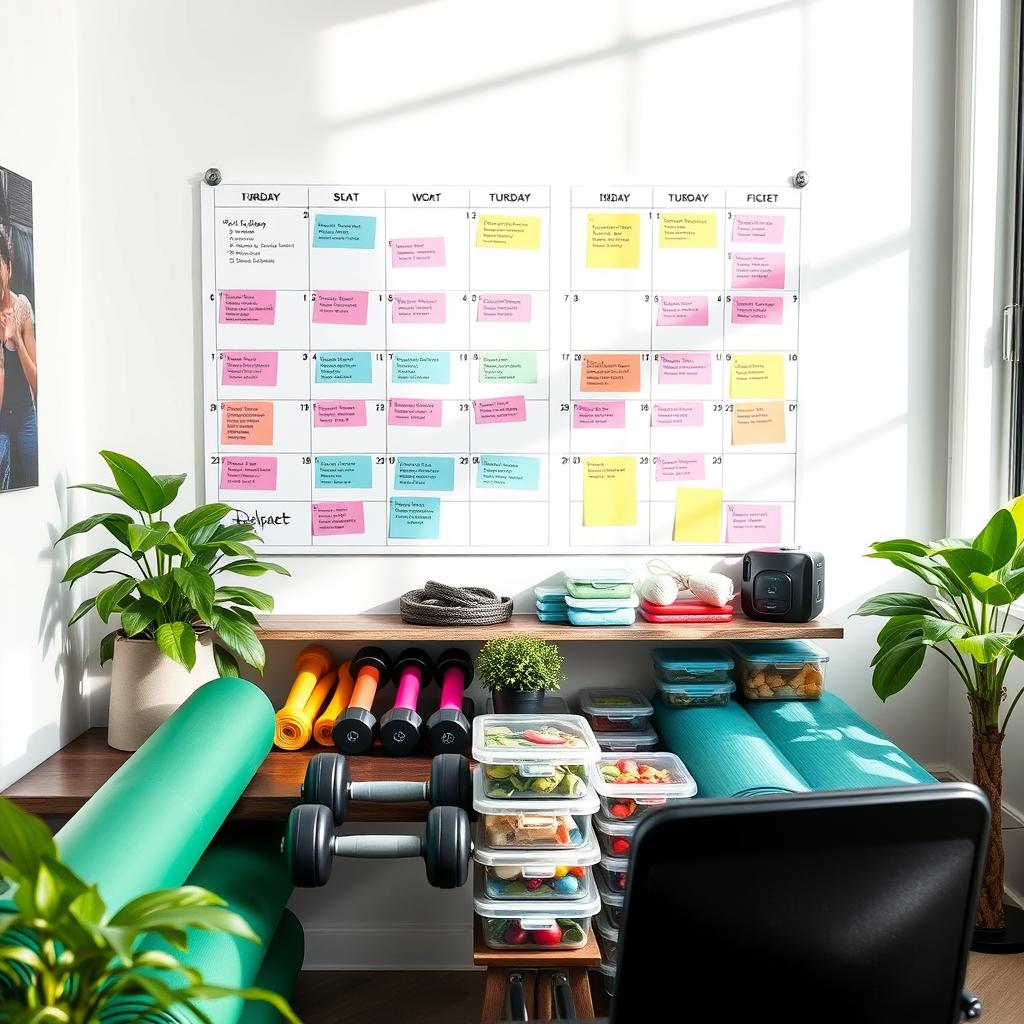
Finding Your Optimal Exercise Time
Everyone’s body has its own best time for exercise. Some like morning, others evening. Find when you’re most energetic to do your best.
- Morning exercisers often experience increased metabolism
- Evening workouts can help release stress from the day
- Midday exercises can provide an energy boost
Balancing Different Types of Workouts
It’s important to mix up your workouts to stay interested. A good plan includes different types of exercises.
| Workout Type | Benefits | Recommended Frequency |
|---|---|---|
| Strength Training | Builds muscle, increases metabolism | 2-3 times per week |
| Cardiovascular Exercise | Improves heart health, burns calories | 3-5 times per week |
| Flexibility Training | Enhances mobility, reduces injury risk | 2-4 times per week |
Making Exercise Fun and Enjoyable
The key to sticking with it is to enjoy what you do. Try new things, join groups, or use fun apps. Make it feel like a game.
“Fitness is not about being better than someone else. It’s about being better than you used to be.” – Unknown
Remember, workout planning should be personal and flexible. Listen to your body and adjust as needed. Stay on track and keep moving forward.
How to Stay Motivated on Your Fitness Journey

Keeping motivated is key to staying consistent with your fitness goals. Every fitness journey has ups and downs. But, with the right strategies, you can stay on track and reach your goals.
“Success is not about perfection, but persistence.” – Unknown
To develop good motivation strategies, you need to know what drives you. Also, create an environment that supports your fitness goals.
- Visualize your success daily
- Practice positive self-talk
- Create a motivational workout playlist
- Set realistic and achievable milestones
When motivation drops, don’t worry. Fitness consistency isn’t about being perfect, but about showing up consistently.
| Motivation Strategy | Impact on Fitness Journey |
|---|---|
| Visualization Techniques | Increases mental preparation and commitment |
| Non-Scale Victories | Boosts confidence and long-term motivation |
| Support Network | Provides accountability and encouragement |
Turn low-motivation days into action by focusing on small, doable steps. Even a short workout is better than nothing.
Remember, your fitness journey is unique. Be kind to yourself and celebrate every step you take forward.
Tracking Progress and Celebrating Small Wins
Fitness tracking is more than just numbers. It’s about seeing how far you’ve come. By tracking your progress, you stay motivated and see how much you’ve improved.

To stay on track with your fitness goals, it’s key to monitor your progress. Break down big goals into smaller, doable steps. This makes your journey feel more achievable and keeps you excited.
Best Apps and Tools for Progress Monitoring
- MyFitnessPal: Comprehensive nutrition and workout tracking
- Strava: Advanced performance metrics for runners and cyclists
- Fitbit: Integrated health and fitness monitoring
- Nike Training Club: Personalized workout progress tracking
Creating Meaningful Milestones
Milestone achievements are vital for staying motivated in fitness. Set goals that are challenging but not too hard. This keeps you moving forward.
| Milestone Type | Example | Tracking Method |
|---|---|---|
| Strength | Increase bench press by 20 lbs | Weight log |
| Endurance | Run 5k without stopping | Running app |
| Flexibility | Touch toes without bending knees | Flexibility assessment |
Reward Systems That Work
Make a reward system that encourages good habits. Choose rewards that match your fitness goals and keep you motivated.
“Success is the sum of small efforts, repeated day in and day out.” – Robert Collier
Remember, fitness tracking is about making progress, not being perfect. Celebrate every achievement, no matter how small. Keep moving forward on your fitness journey.
Building a Supportive Fitness Community
Connecting with others can turn your fitness journey into a fun shared adventure. A strong fitness community offers the support you need to stay motivated and reach your health goals.
“Surround yourself with people who push you to do better, but who also accept you as you are.” – Unknown
Finding the right workout buddies can make exercise more fun and help you stay committed. Here are some ways to build your fitness support network:
- Join local fitness classes or group training sessions
- Connect with fitness enthusiasts through social media platforms
- Use fitness apps that facilitate community interactions
- Participate in community fitness challenges
The power of social support goes beyond just motivation. Studies show that people with strong fitness community ties are more likely to keep up with their exercise routines.
| Community Type | Benefits | Engagement Level |
|---|---|---|
| Local Fitness Groups | In-person motivation | High |
| Online Fitness Communities | Flexible interaction | Medium |
| Workout Buddy Partnerships | Personal accountability | High |
Pro tip: Choose workout buddies who share similar fitness goals and have a positive, supportive attitude. Your fitness community can be the secret to keeping up with long-term health and wellness.
Overcoming Common Fitness Plateaus and Setbacks
Every fitness journey hits roadblocks. Learning to deal with fitness plateaus and burnout can turn challenges into growth and resilience.
Fitness plateaus happen when your body gets used to workouts. It’s key to recognize these points for better improvement and motivation.
Dealing with Workout Burnout
Workout burnout can stop even the most committed. Signs include:
- Persistent fatigue
- Decreased motivation
- Reduced performance
- Mental exhaustion
“Rest is not a sign of weakness, but a strategic component of fitness success.” – Professional Fitness Coach
Strategies for Breaking Through Plateaus
Here are ways to beat fitness plateaus:
- Vary your workout intensity
- Introduce new exercise types
- Adjust nutrition intake
- Prioritize recovery and sleep
Adapting to Life Changes
Life changes can mess with your fitness routine. Being flexible helps keep your fitness spirit alive.
| Life Change | Fitness Adaptation Strategy |
|---|---|
| New Job | Flexible workout scheduling |
| Relocation | Explore local fitness options |
| Family Commitments | Home workout alternatives |
Getting Back on Track
Getting back into fitness after a break needs patience and kindness to yourself. Start with easier workouts, then slowly get harder to avoid injury and build confidence.
Remember, setbacks are just temporary. Your dedication to health is what truly matters in your fitness journey.
Conclusion
Starting a fitness journey is more than just getting in shape. It’s about growing as a person and staying motivated. The tips in this article help you face challenges and keep your health goals in sight.
Success in fitness isn’t about being perfect. It’s about making steady progress. Every workout and healthy choice moves you closer to your health goals. Remember, you can get better at staying motivated with practice and kindness to yourself.
Your fitness journey is special, with its own ups and downs. By using the strategies we talked about, like setting clear goals and finding support, you’re getting ready to stay motivated. See this journey as a chance to learn about your body and mind.
Be patient, keep exploring, and believe in your ability to change. Your dedication today will help you become a healthier, happier person tomorrow. The path to wellness is a long journey of self-discovery and empowerment.
FAQ
How long does it typically take to see fitness results?
You might see changes in 4-8 weeks with regular exercise and good food. But, it really depends on how hard you work out, what you eat, your genes, and how committed you are. Remember, feeling more energetic, stronger, and happier can happen sooner than you think.
What if I lose motivation during my fitness journey?
Losing motivation is normal. Try new things, set easy goals, track your progress, and join a fitness group. It’s okay to have ups and downs. Just be kind to yourself and keep going, even if it’s not perfect.
How often should I work out?
The American College of Sports Medicine says you need 150 minutes of moderate exercise or 75 minutes of hard exercise a week. For most, this means 3-5 workouts a week. Start slow and get more intense as you get better.
Do I need expensive equipment to stay fit?
No way! You can use your own body, watch free workout videos, or go for walks. Many apps offer workouts that don’t need much or any equipment. Being creative and consistent is more important than buying expensive stuff.
How important is diet in my fitness journey?
Nutrition is key – it’s about 70-80% of getting fit. You can’t outrun a bad diet. Eat balanced foods, enough protein, lots of veggies, and drink plenty of water. See food as fuel for your body, not just calories.
How do I prevent workout burnout?
Avoid burnout by mixing up your workouts, resting enough, setting achievable goals, and listening to your body. Try different activities, take rest days, and keep your goals realistic. This helps keep you excited and avoids getting too tired.
Can I start a fitness journey if I’m completely out of shape?
Yes! Every fitness journey begins with one step. Start with easy exercises, check with a doctor if needed, and slowly get better. Everyone starts somewhere, and the most important thing is to take that first step and keep going.
How do I stay motivated when progress seems slow?
Focus on the good stuff like more energy, better sleep, and a happier mood. Take photos, keep a workout log, celebrate small wins, and remember fitness is a long-term journey, not a quick fix.